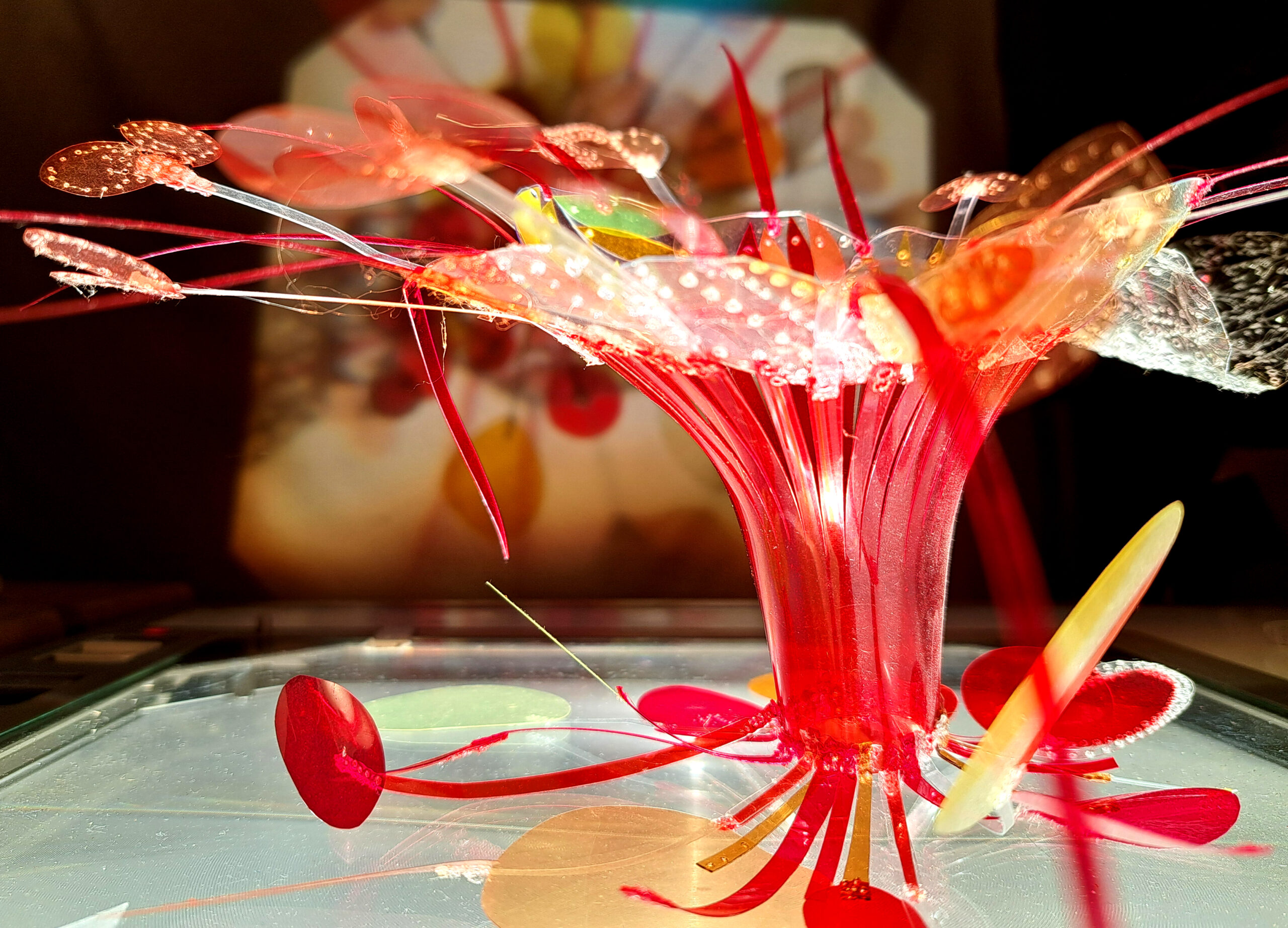
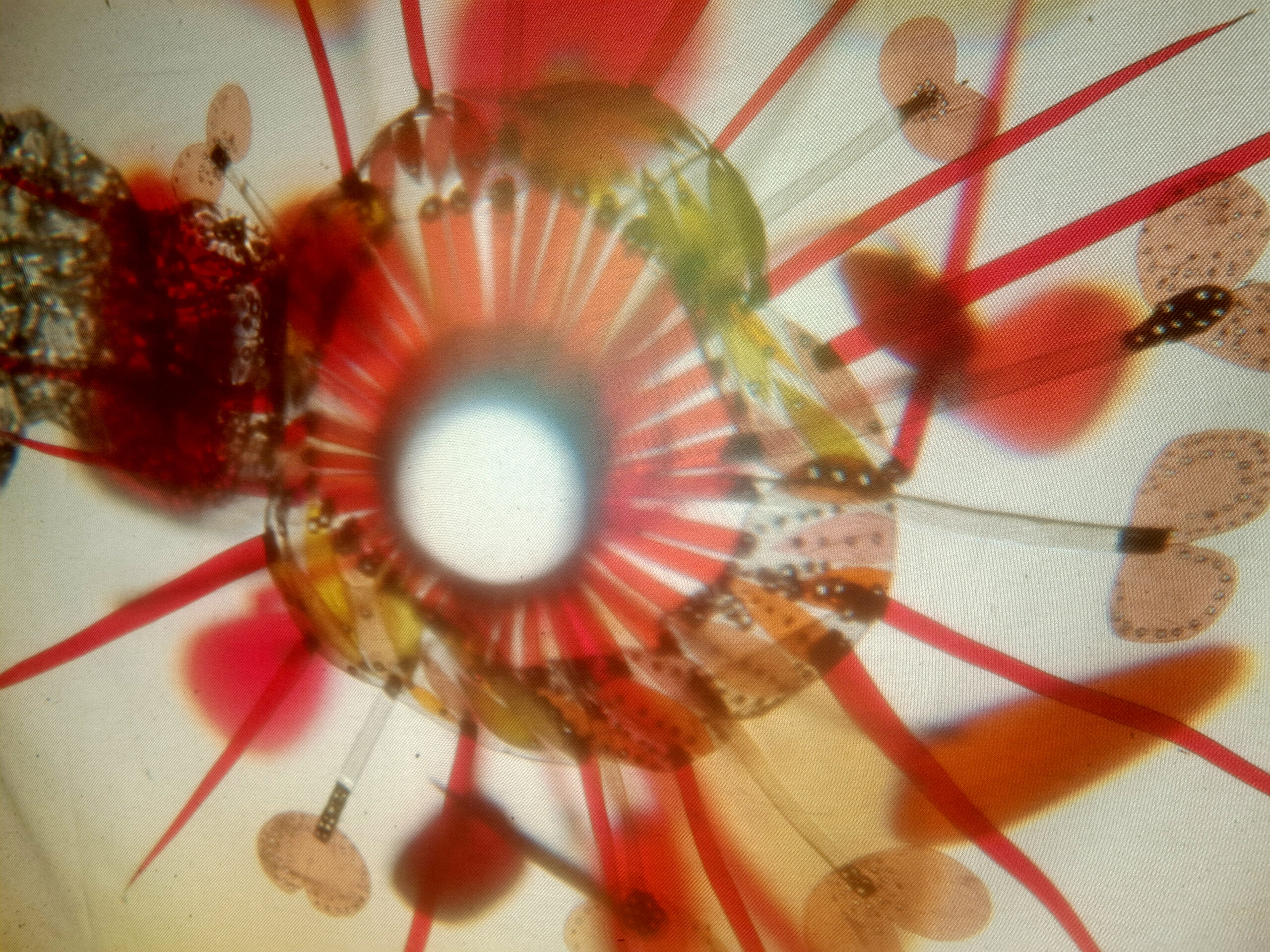
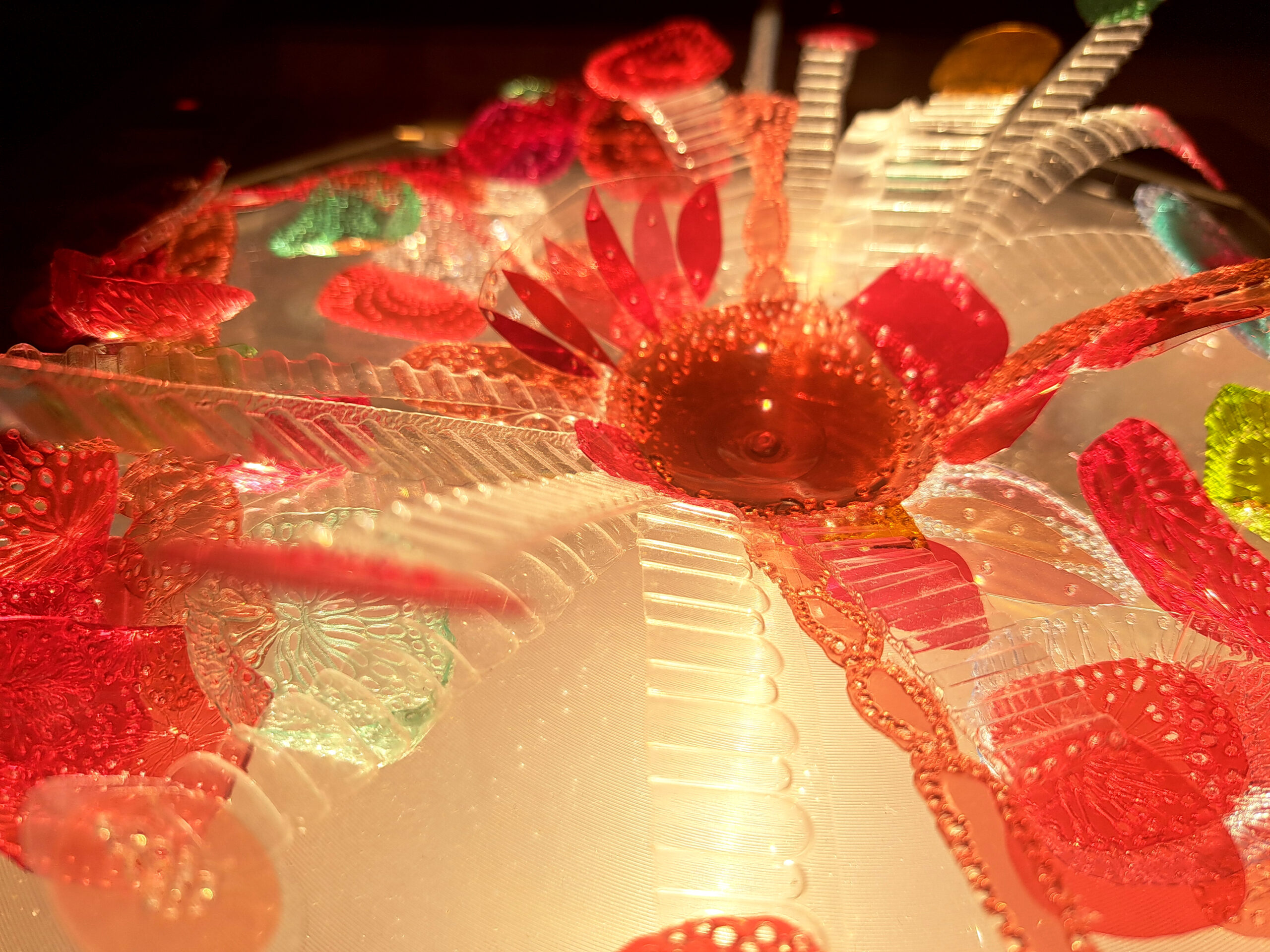
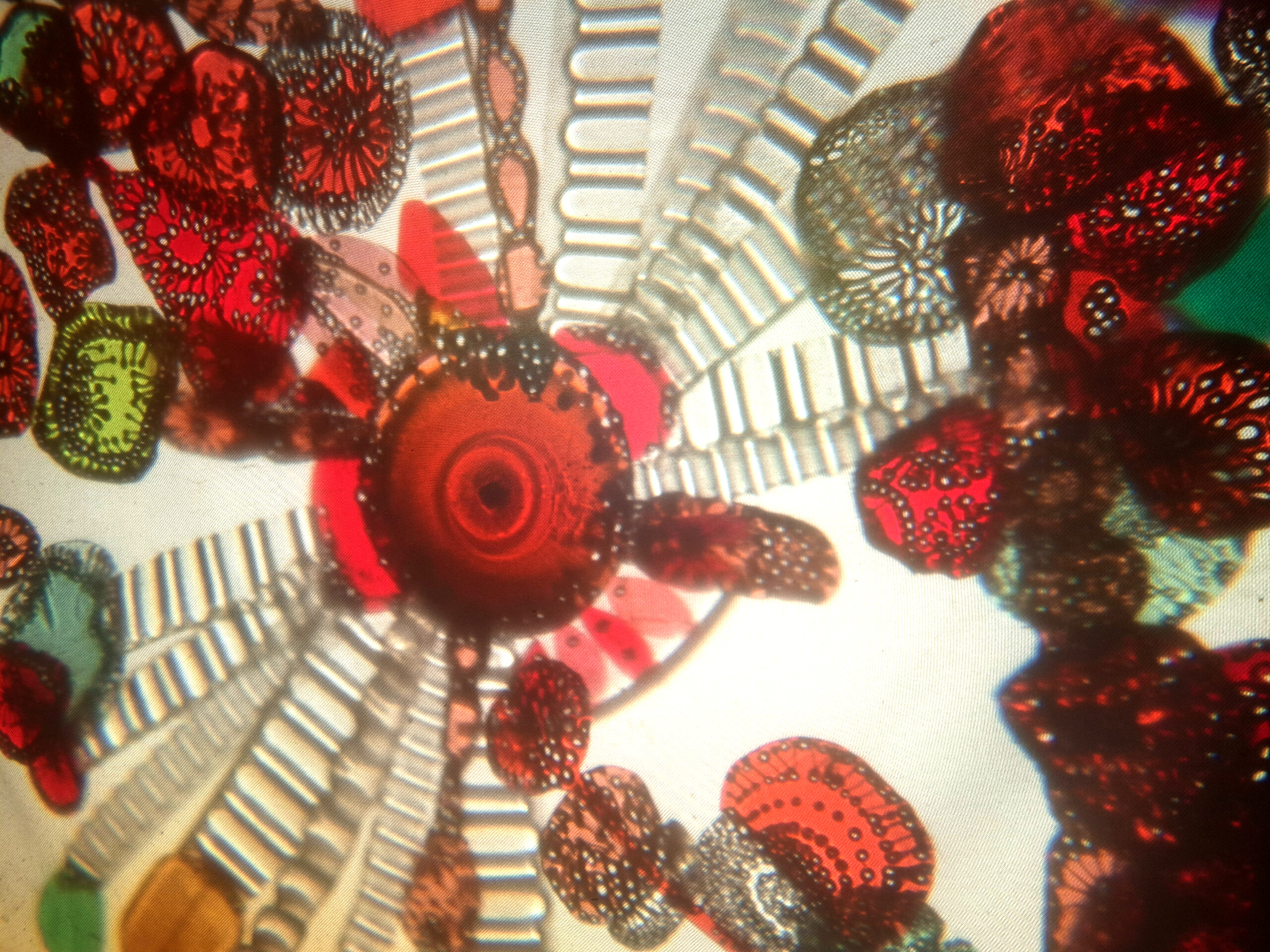
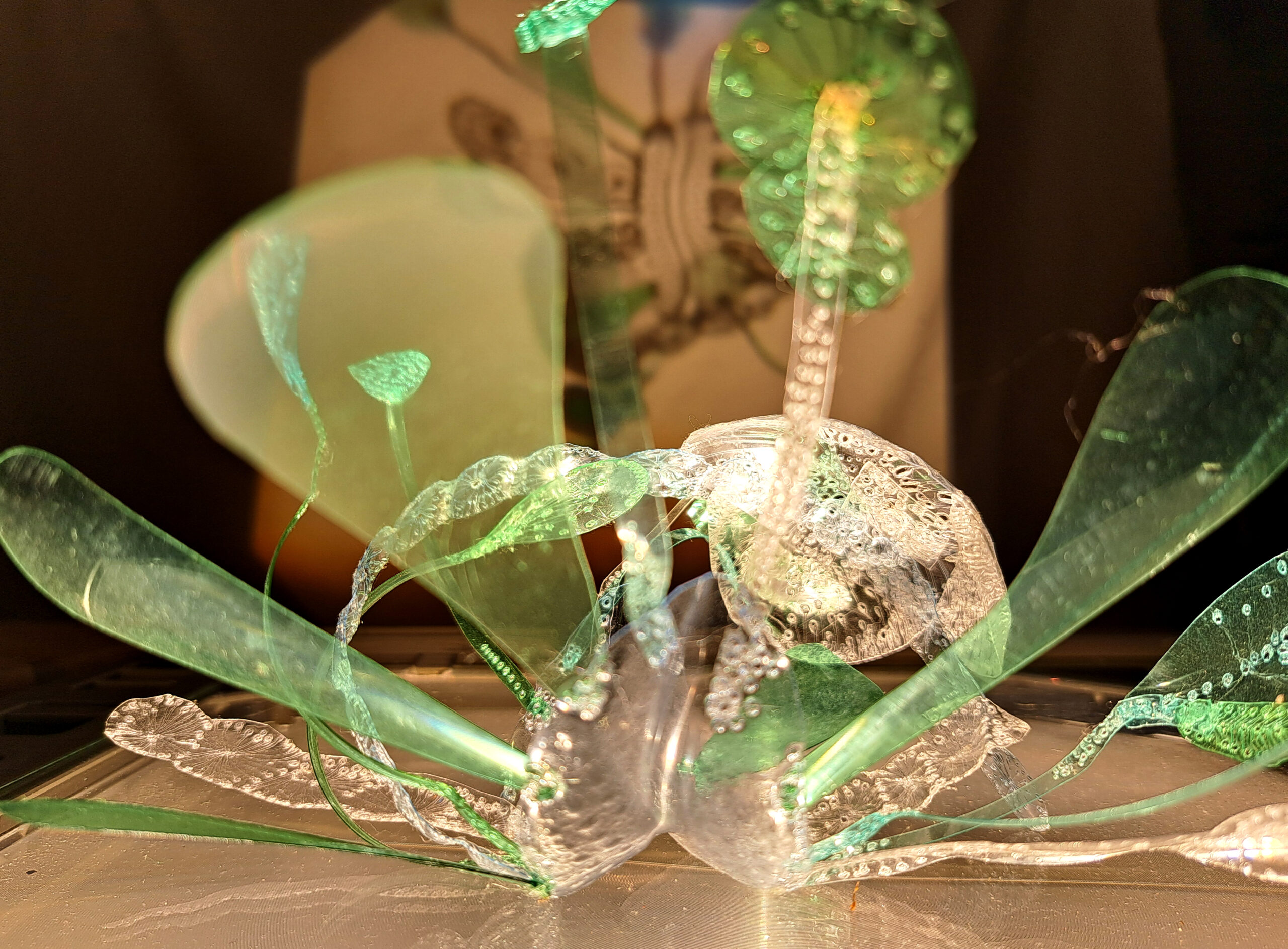
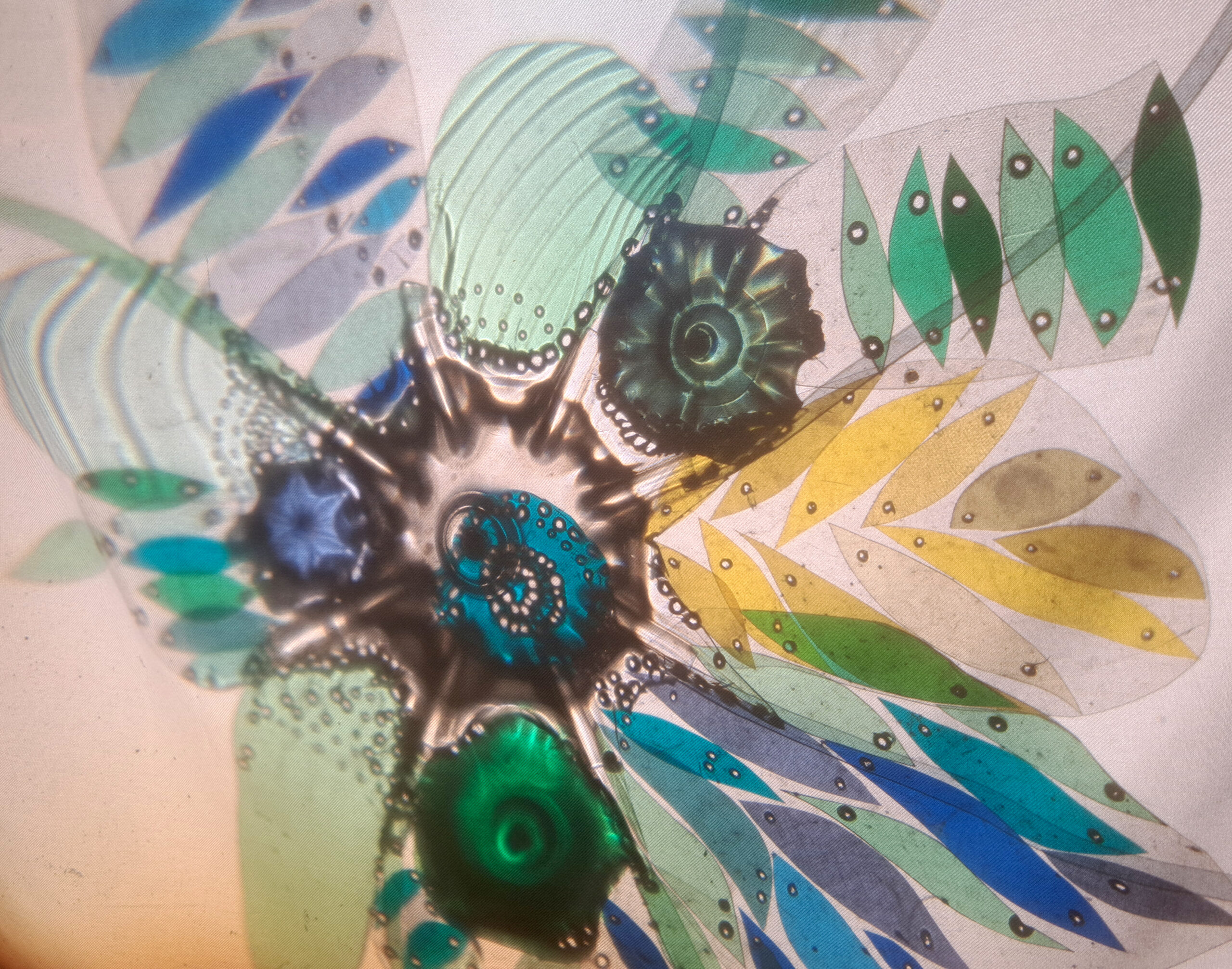
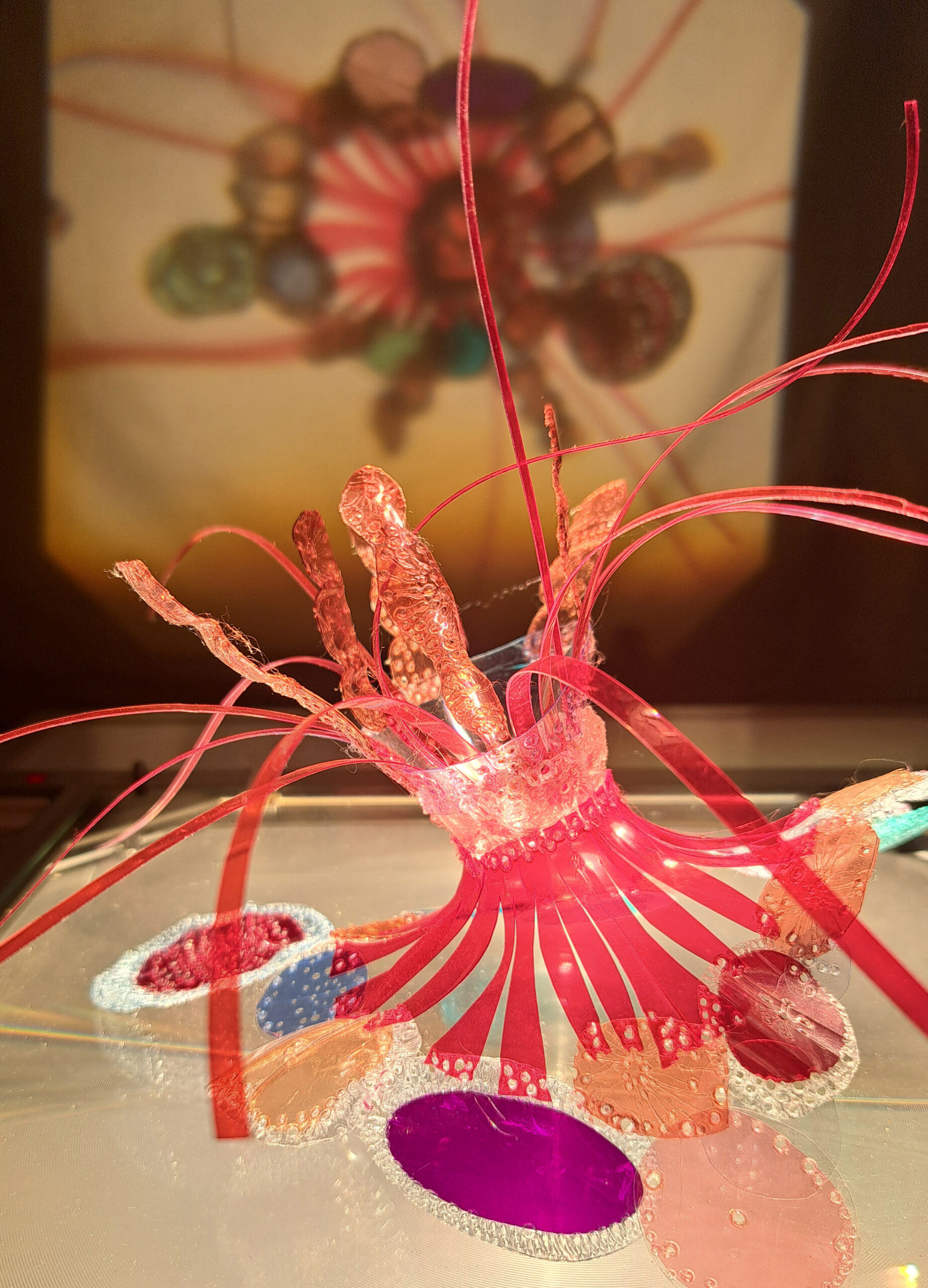
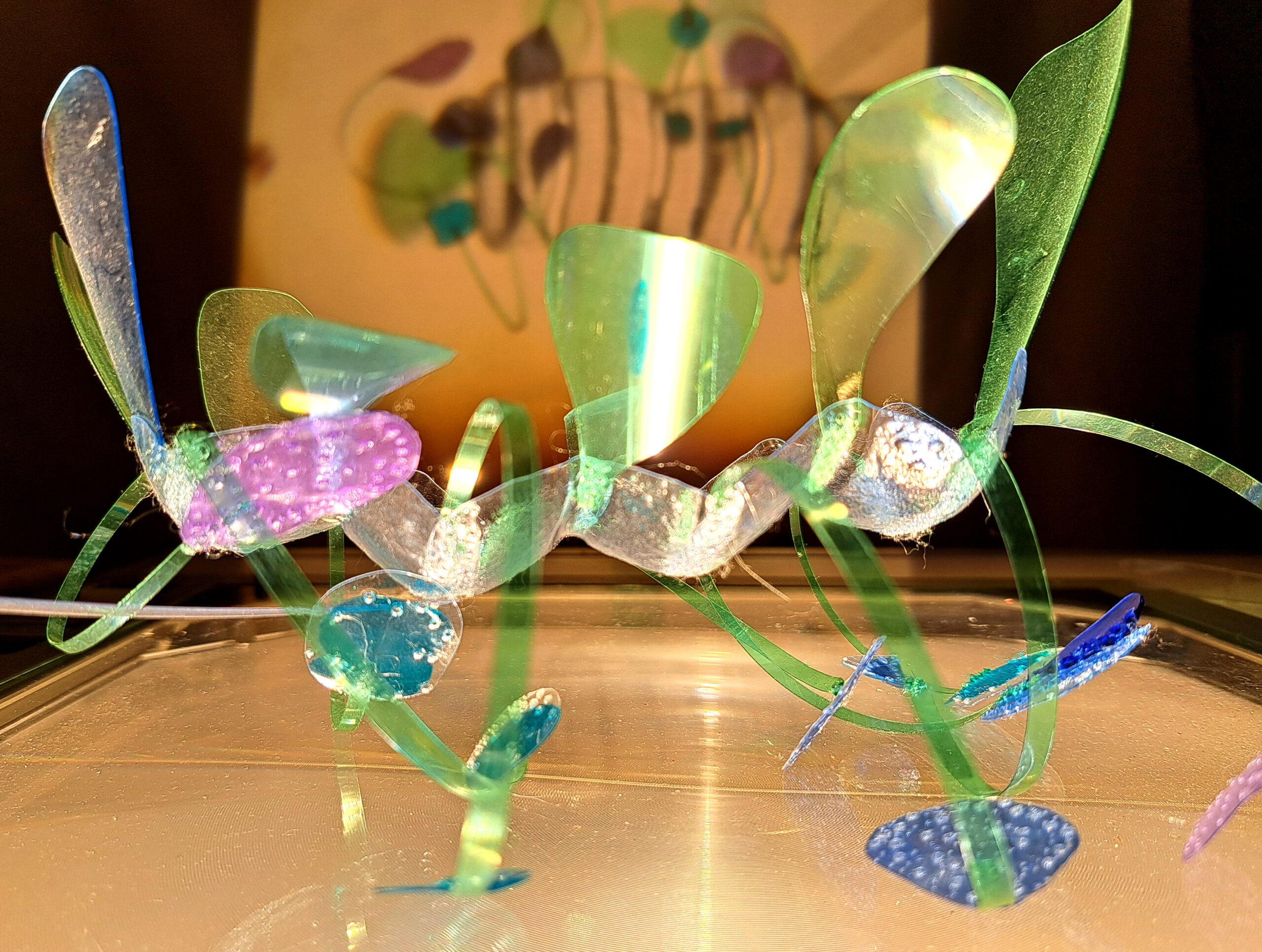
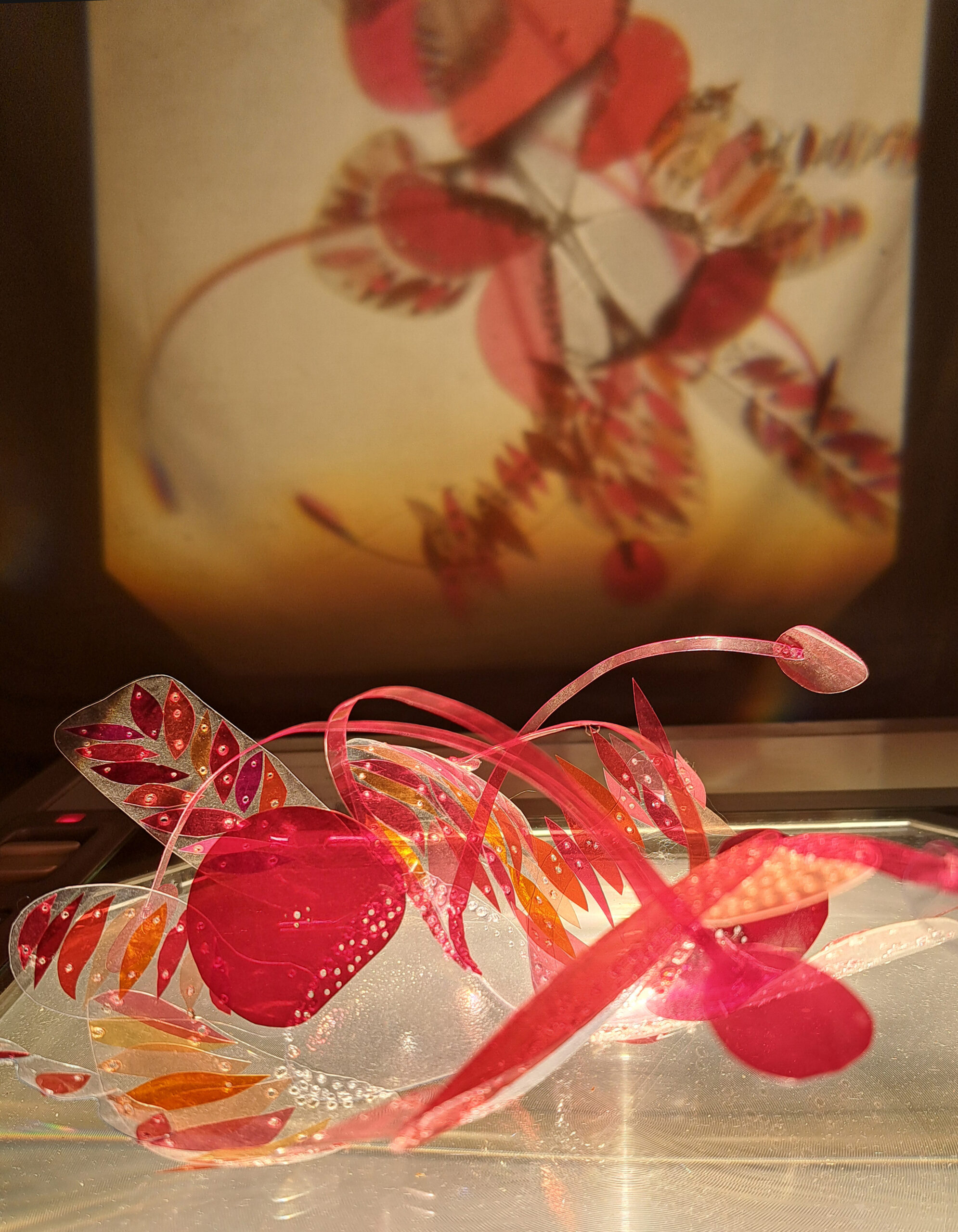
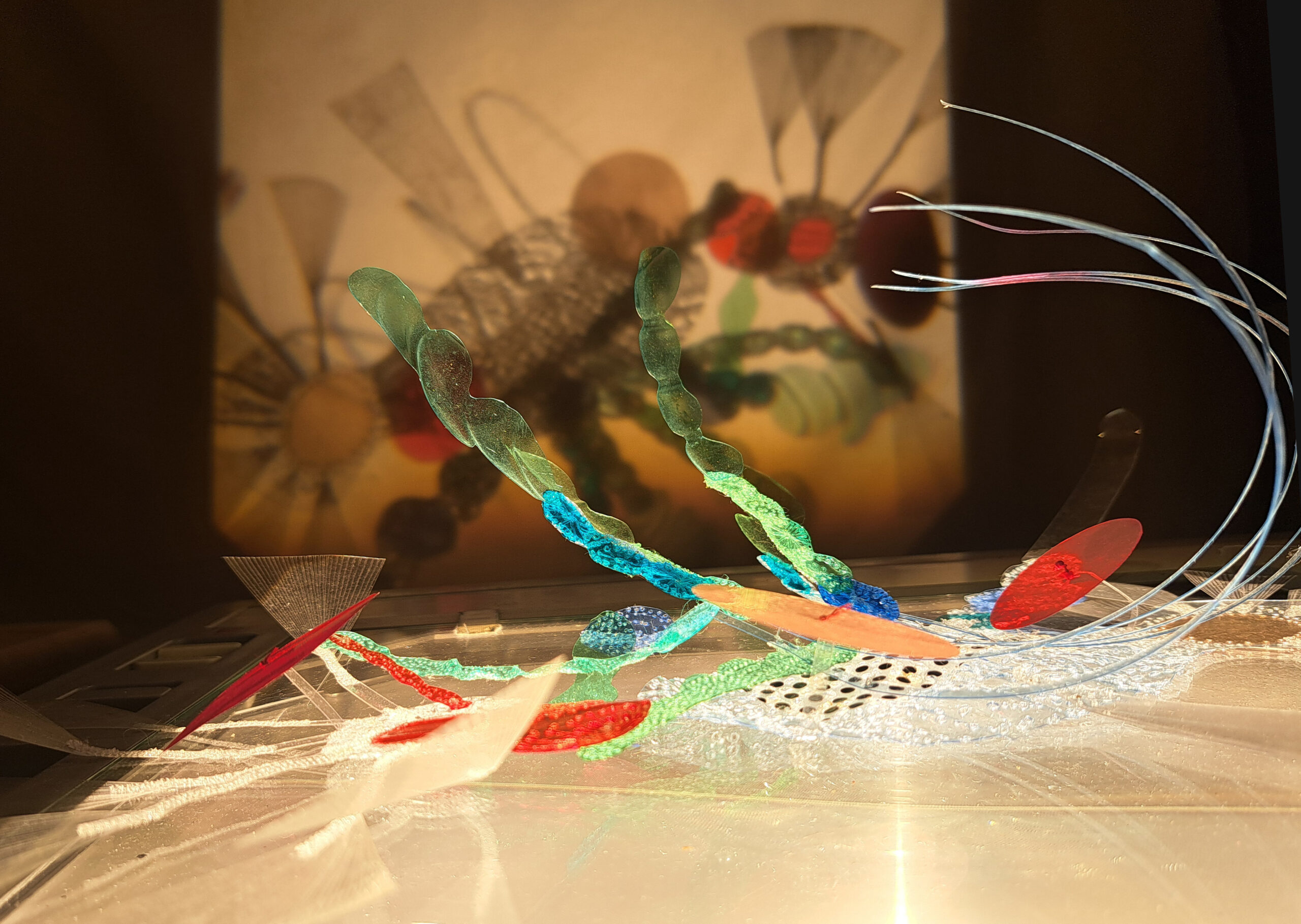
These sculptures begin with poor, everyday materials — plastic packaging, bottles, and discarded fragments. Through careful assembly, they generate an image that is unexpectedly rich, colorful, and visually dense.
When placed in front of light, the object undergoes a form of sublimation: its projection enlarges it like cinema, while the precision of its construction gives it the delicacy of a crafted jewel.
Depending on the surface, angle, or scale, each sculpture shifts in appearance, revealing new contours and new identities. What was once ordinary plastic becomes a luminous, sculptural presence.
. La projection agrandit l’objet comme au cinéma, tandis que la finesse du travail la rapproche d’un bijou. Ces objets auparavant banals prennent alors une nouvelle identité.
Cloth Dolls
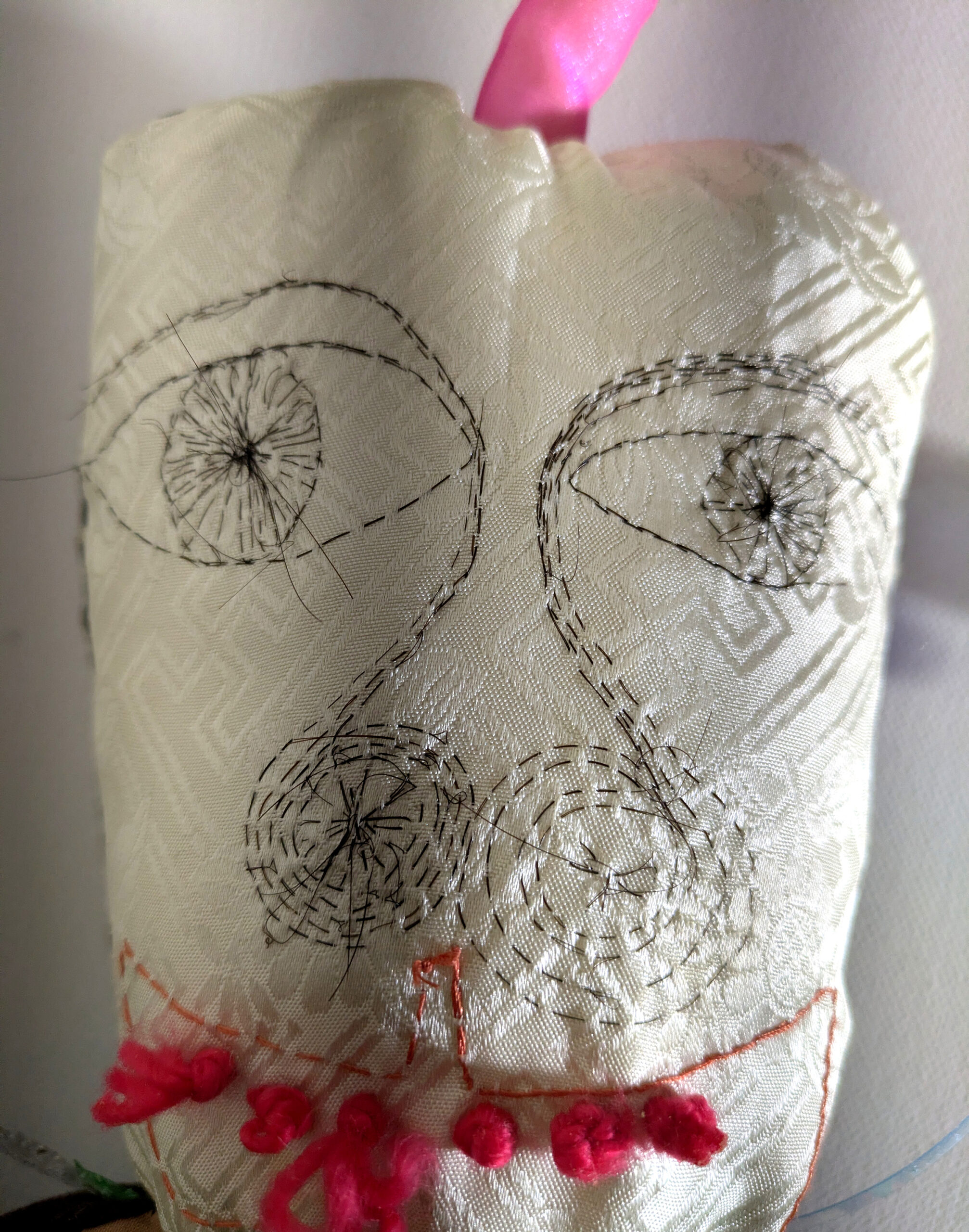
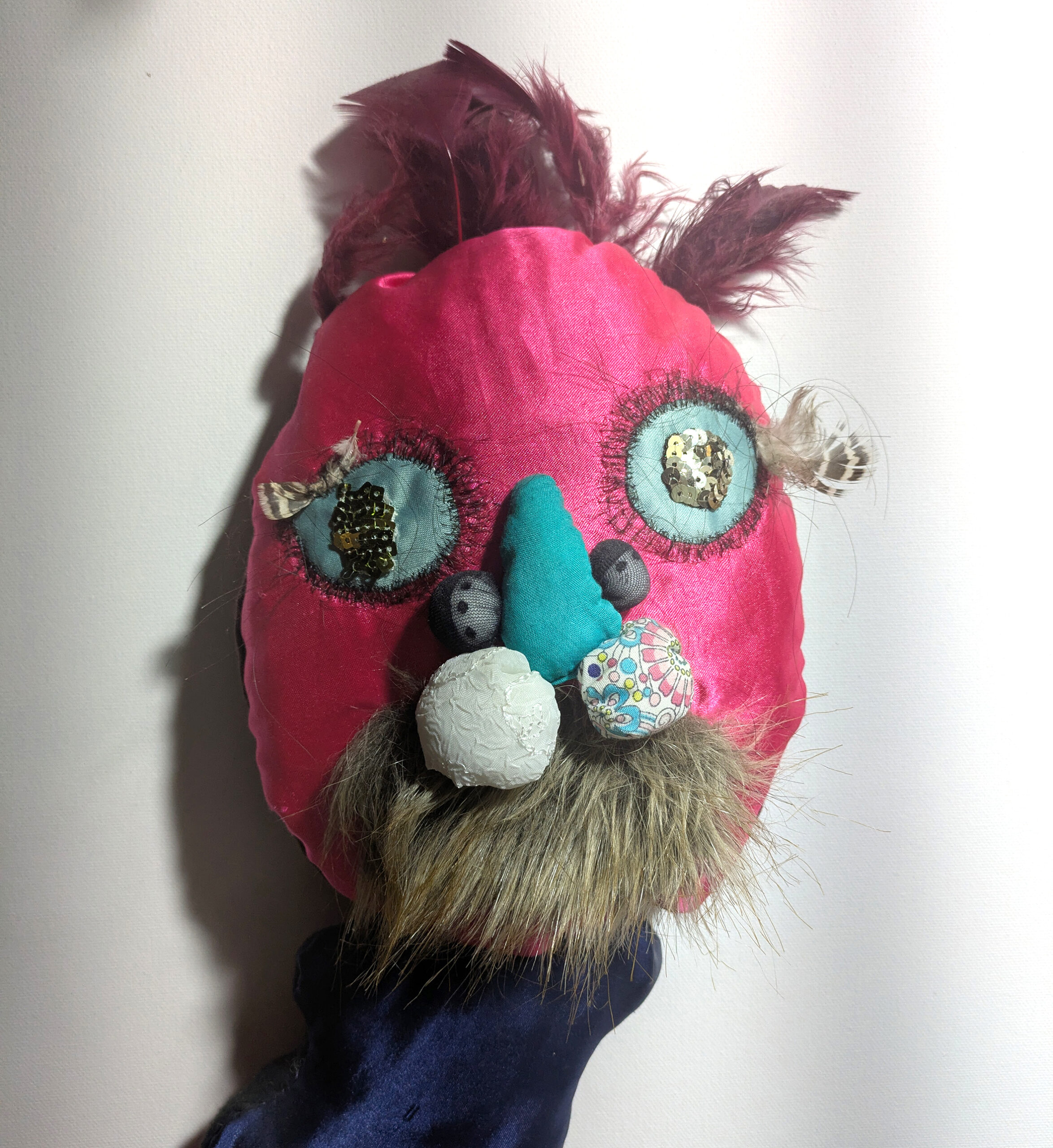
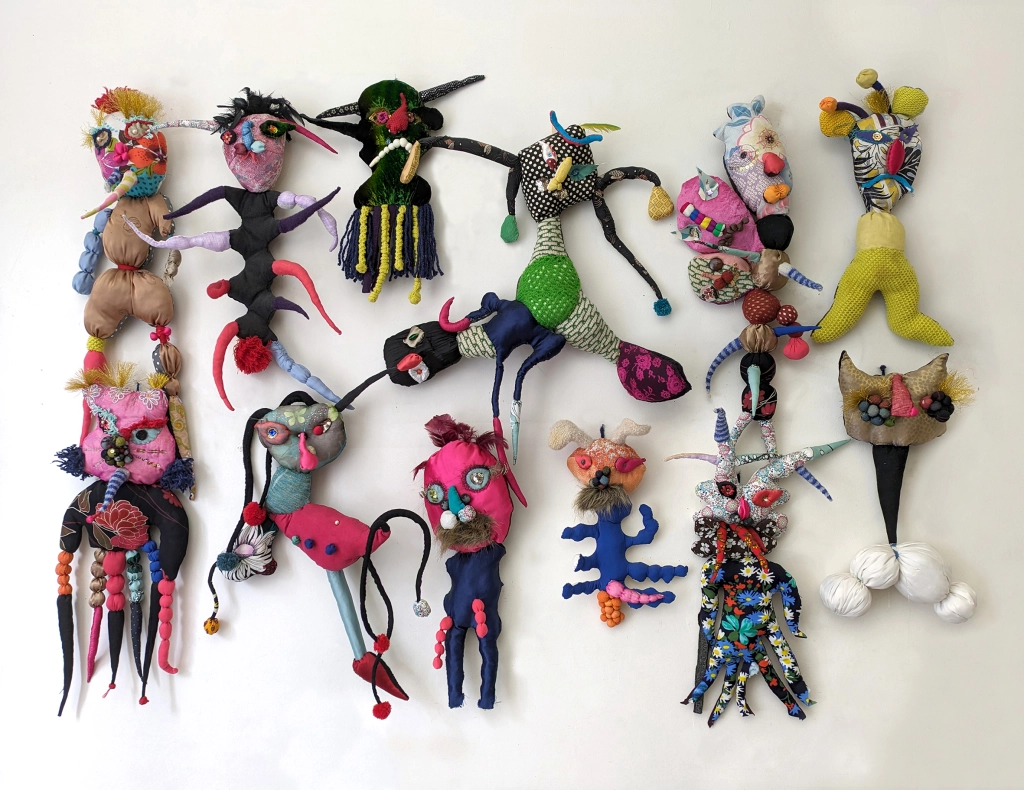
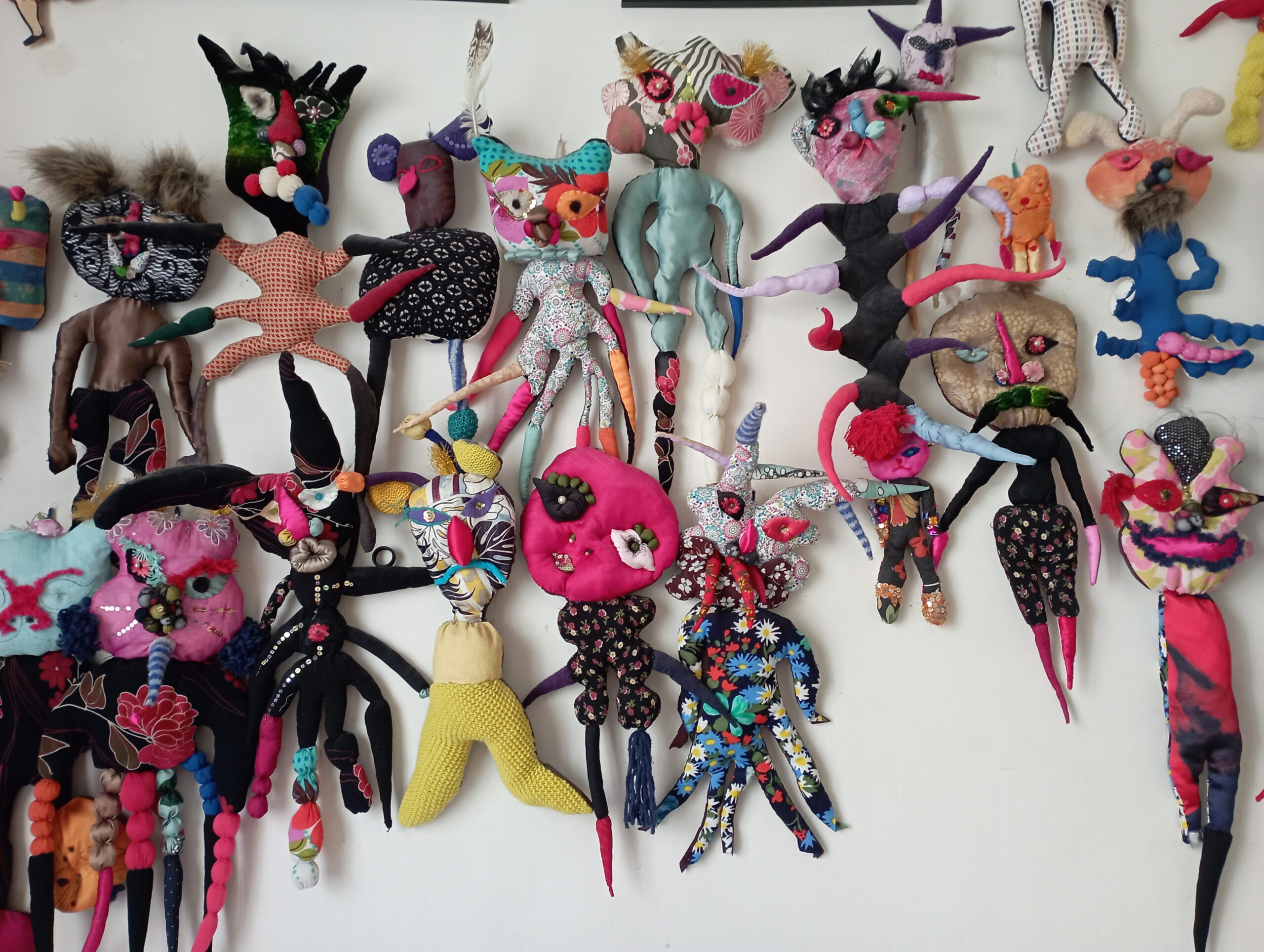
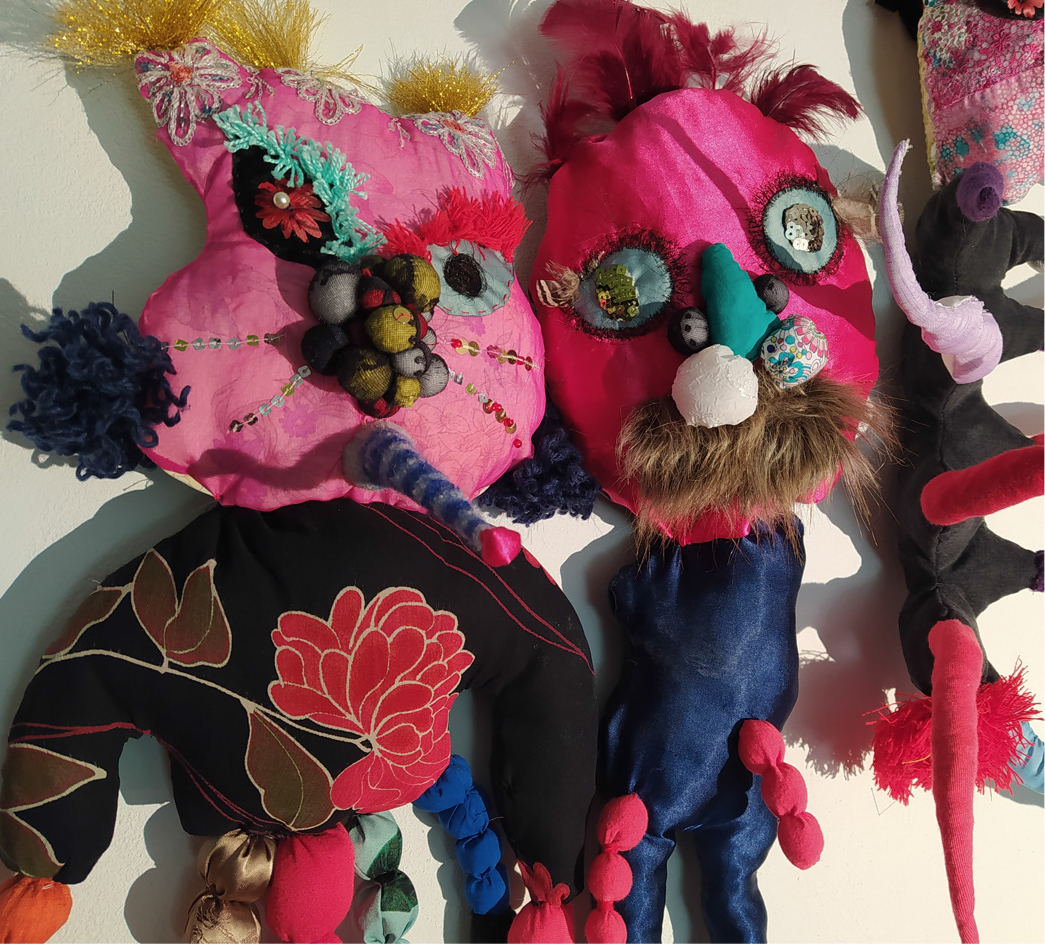
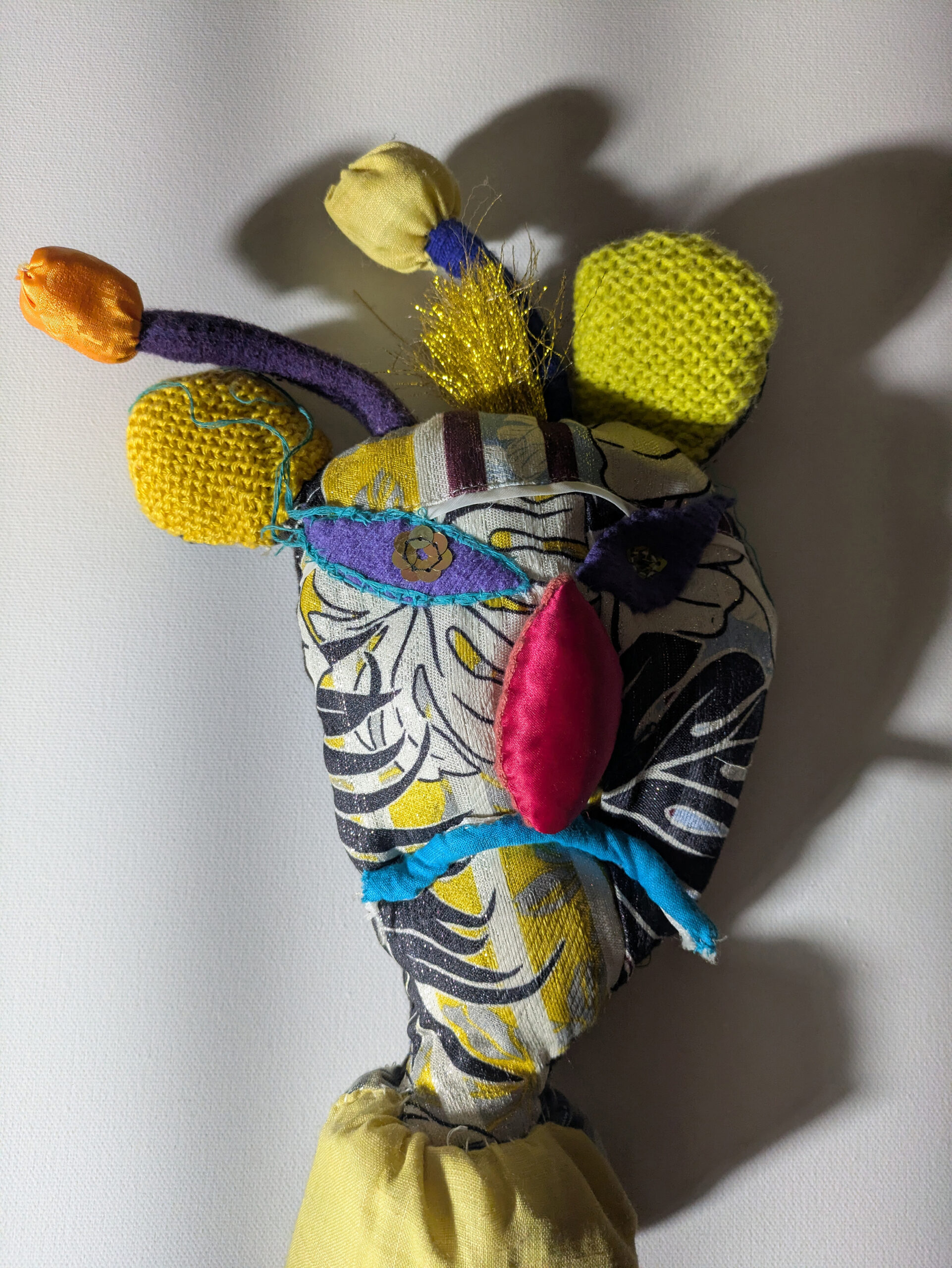
These cloth dolls, made from worn garments and discarded textiles, mark the first stage of a sculptural evolution. Their bodies are stitched from fragments that once carried traces of daily life, while the embroidered hair introduces a delicate, almost anatomical detail — a gesture that transforms textile into something closer to living matter.
Like insects emerging from a chrysalis, these figures embody a quiet metamorphosis. Through stitching, layering, and the slow construction of their hair, the act of making becomes a form of sublimation: a way of turning humble materials into new bodies.
What begins as cloth becomes a sculptural presence, announcing the vocabulary that will continue to evolve in later works.